How to play · Updated 2026-07-22
How to Play BalleBaazi Contests
Playing well is a repeatable workflow: map roles, spend salary deliberately, multiply the right minutes, and respect the toss window.
Below is a first-contest walkthrough you can rerun on any T20 night without copying someone else’s card.
Basics
What you are actually selecting
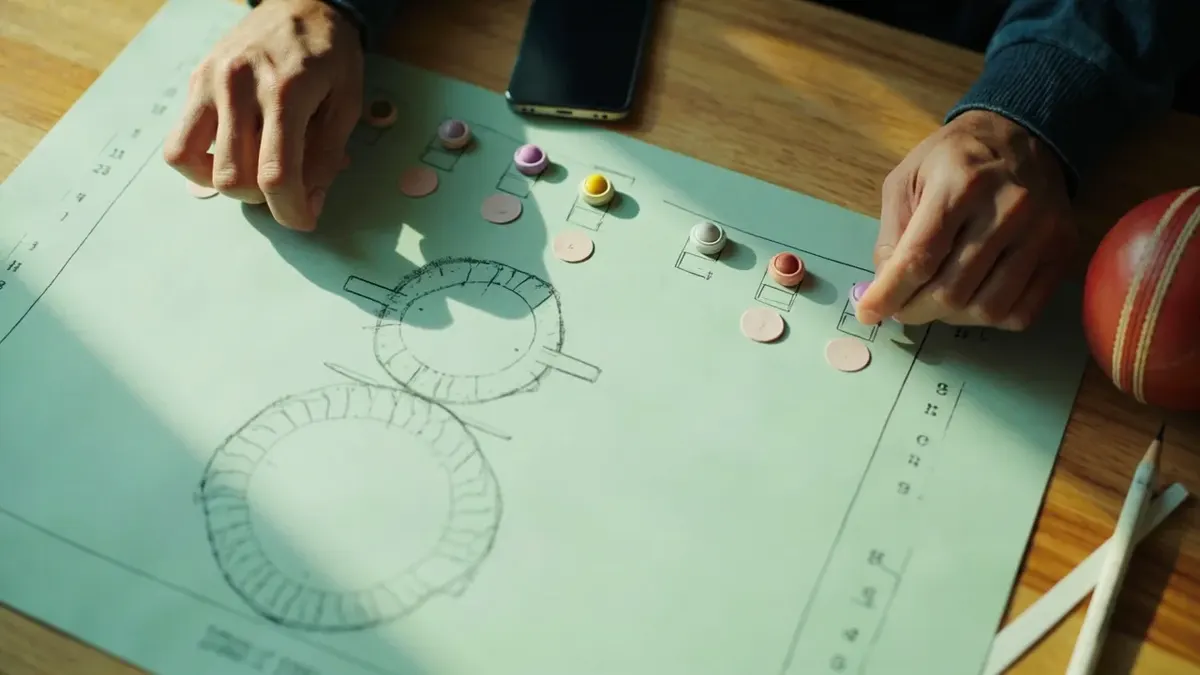
Strong fantasy eleven basics work begins with role maps, not celebrity rankings. Write down who actually bowls at the death, who keeps when the primary glove is rested, and who only enters if a powerplay fails.
When two athletes look equal on recent totals, prefer the one with a clearer path to minutes in tonight's game state. Eleven real athletes, salary cap, role minimums, captain and vice-captain multipliers.
Budget leftovers are a feature. Saving a small band for post-toss swaps often beats locking a fashionable third spinner too early.
Track opposing top-order matchups: left-right combinations can blunt a single specialist, while an inexperienced batting unit may inflate bowling value.
Keep a column for uncertainty. Game-time decisions deserve pre-selected replacements with similar salary, not panic searches at lock-in.
Venue dimensions matter more than highlight reels. Short square boundaries change four rates; large square pockets reward placement over pure power.

Roles
Build role security first
Strong role security fantasy work begins with role maps, not celebrity rankings. Write down who actually bowls at the death, who keeps when the primary glove is rested, and who only enters if a powerplay fails.
When two athletes look equal on recent totals, prefer the one with a clearer path to minutes in tonight's game state. Keepers, openers, finishers, powerplay and death bowlers each solve different failures.
Budget leftovers are a feature. Saving a small band for post-toss swaps often beats locking a fashionable third spinner too early.
Track opposing top-order matchups: left-right combinations can blunt a single specialist, while an inexperienced batting unit may inflate bowling value.
Keep a column for uncertainty. Game-time decisions deserve pre-selected replacements with similar salary, not panic searches at lock-in.
Walkthrough
Numbered first-contest path
Open both squad lists
Tag probable XI vs bench risk.
Fill scarce roles early
Keeper and out-of-form-but-locked stars can distort budgets late.
Cover bowling overs
Avoid four batters who never bowl if the pitch is two-paced.
Leave toss slack
Keep one flexible salary pocket.
Assign C/VC
Highest reliable minutes with matchup context.
Join a room that fits
Low-field while learning; large-field only with a thesis.

Contests
Contest types and variance
Strong contest variance choice work begins with role maps, not celebrity rankings. Write down who actually bowls at the death, who keeps when the primary glove is rested, and who only enters if a powerplay fails.
When two athletes look equal on recent totals, prefer the one with a clearer path to minutes in tonight's game state. Head-to-heads punish single mistakes; large fields demand differentiation.
Budget leftovers are a feature. Saving a small band for post-toss swaps often beats locking a fashionable third spinner too early.
Track opposing top-order matchups: left-right combinations can blunt a single specialist, while an inexperienced batting unit may inflate bowling value.
Keep a column for uncertainty. Game-time decisions deserve pre-selected replacements with similar salary, not panic searches at lock-in.

Toss
Post-toss edits worth making
Strong post toss fantasy edits work begins with role maps, not celebrity rankings. Write down who actually bowls at the death, who keeps when the primary glove is rested, and who only enters if a powerplay fails.
When two athletes look equal on recent totals, prefer the one with a clearer path to minutes in tonight's game state. Swap out players clearly benched; avoid cosmetic reshuffles that burn focus.
Budget leftovers are a feature. Saving a small band for post-toss swaps often beats locking a fashionable third spinner too early.
Track opposing top-order matchups: left-right combinations can blunt a single specialist, while an inexperienced batting unit may inflate bowling value.
Keep a column for uncertainty. Game-time decisions deserve pre-selected replacements with similar salary, not panic searches at lock-in.
Mistakes
Beginner leaks to close early
- Seven players from one side without a weather reason
- Captain on a pure impact sub candidate
- Ignoring opposite-hand matchups with a key spinner
- Chasing yesterday’s top scorecard blindly
Strong beginner fantasy mistakes work begins with role maps, not celebrity rankings. Write down who actually bowls at the death, who keeps when the primary glove is rested, and who only enters if a powerplay fails.
When two athletes look equal on recent totals, prefer the one with a clearer path to minutes in tonight's game state. Write the mistake down once so you do not repurchase it mid-season.
Budget leftovers are a feature. Saving a small band for post-toss swaps often beats locking a fashionable third spinner too early.
Practice
Learn in cheaper rooms first
Strong practice contests learning work begins with role maps, not celebrity rankings. Write down who actually bowls at the death, who keeps when the primary glove is rested, and who only enters if a powerplay fails.
When two athletes look equal on recent totals, prefer the one with a clearer path to minutes in tonight's game state. Skill grows faster when feedback is frequent and stakes are survivable.
Budget leftovers are a feature. Saving a small band for post-toss swaps often beats locking a fashionable third spinner too early.
Track opposing top-order matchups: left-right combinations can blunt a single specialist, while an inexperienced batting unit may inflate bowling value.
Extended desk notes
Deeper notes for How To Play
Match-night craft without folklore — note 1
Captaincy multiplies minutes, not vibes. If a star might bat only eight balls in a collapsed chase, the multiplier magnifies a thin sample. On topics tied to how to play, keep the same discipline: evidence first, stake sizes second, ego last.
Large fields reward differentiated theses; small fields reward fewer unforced errors. Room choice is a strategic decision, not a default button. Specific to how to play: re-check live product surfaces before you act on any number you memorised last week.
If a download source cannot explain publisher identity, stop. Speed is not a safety argument when device integrity is on the line. On topics tied to how to play, keep the same discipline: evidence first, stake sizes second, ego last.
Celebrate clean process with friends. Mocking someone for sitting out a messy slate is how groups push each other into avoidable losses. On topics tied to how to play, keep the same discipline: evidence first, stake sizes second, ego last.
Operational detail readers actually use — note 2
Write decisions in plain language before the lobby opens. A single sentence per pick forces honesty about minutes and matchups. On topics tied to how to play, keep the same discipline: evidence first, stake sizes second, ego last.
Keep a private timestamp log for deposits, withdrawals and support messages. Memory compresses stressful evenings and invents cleaner stories than the screens showed. Specific to how to play: re-check live product surfaces before you act on any number you memorised last week.
Dew is not a meme; it is moisture that changes grip and skid. If the outfield shines under lights, revisit spin-heavy stacks with fresh eyes. On topics tied to how to play, keep the same discipline: evidence first, stake sizes second, ego last.
Promotions are contracts. If eligibility, expiry and withdrawal treatment are missing, you do not yet know enough to opt in. On topics tied to how to play, keep the same discipline: evidence first, stake sizes second, ego last.
Season-long sustainability — note 3
Watchlists beat encyclopedias. A focused set of roles you actually roster will outperform a giant spreadsheet you never open at toss time. On topics tied to how to play, keep the same discipline: evidence first, stake sizes second, ego last.
Group play needs pre-agreed caps. Social pressure is a real variance source that never appears in points tables. Specific to how to play: re-check live product surfaces before you act on any number you memorised last week.
Rehearse the post-toss five minutes. Know which salary pocket is flexible and which names are locked because replacements do not exist in your remaining budget. On topics tied to how to play, keep the same discipline: evidence first, stake sizes second, ego last.
| Checkpoint | Why it matters for how to play | Done? |
|---|---|---|
| Minutes confirmed | No salary on athletes who may not play | ☐ |
| Rules sheet opened | Multipliers and bonuses can differ by room | ☐ |
| Stake within ceiling | Entertainment budget remains intact | ☐ |
| Toss plan ready | Flexible pocket identified in advance | ☐ |
| Support packet ready | Timestamps and IDs available if something breaks | ☐ |
Editorial reminder for how to play: ballebaaziin.com publishes independent guidance. Confirm live terms, eligibility and scoring on official product surfaces. 18+ only where permitted. Fantasy involves risk.
Readers arriving for how to play usually need fewer slogans and more sequencing. Start with the decision that unlocks the others: eligibility and bankroll first, then craft, then commercial actions.
When information is incomplete on how to play, the professional move is to shrink stake size or sit out. Forced certainty is how bankrolls erode during noisy weeks.
Document your own outcomes around how to play for a month. Patterns in your mistakes are more valuable than another stranger’s highlight card.
If a friend pressures you to ignore a limit because of a “special” angle on how to play, treat that pressure as a risk signal equal to a bad pitch report.
Technical hygiene still counts: authentic installs, careful permissions, and verified support channels protect the hobby from becoming a security incident.
Finally, keep cricket enjoyable. If how to play content is the only reason you open the sport you used to love casually, rebuild healthier distance with timers and planned breaks.
FAQ
Questions specific to this topic
How many players come from each real team?
Rules vary by contest template; read the card builder constraints each time.
Can I edit after the match starts?
Usually not for players who have already been locked by the deadline rules.
Is there a perfect eleven?
No. There are defensible elevens under uncertainty.
Open BalleBaazi when you are ready to play
Sponsored route · confirm terms at destination · 18+
Note
Editorial & compliance
ballebaaziin.com publishes independent editorial guidance. We do not invent ownership, bonus percentages, legal status, or withdrawal clocks. Fantasy cricket is 18+ where permitted. If information conflicts with the operator destination, treat the destination as authoritative for account actions.